How to straighten bent fixed SUP fins

A gentle procedure for a fixed fin, meaning a fin that cannot be removed. Continue only when it is bent but has no cracks, cuts or lifting at its base.

  • 7 steps
  • Intact fixed fin only
  • Hot water, not boiling
Start with the inspection
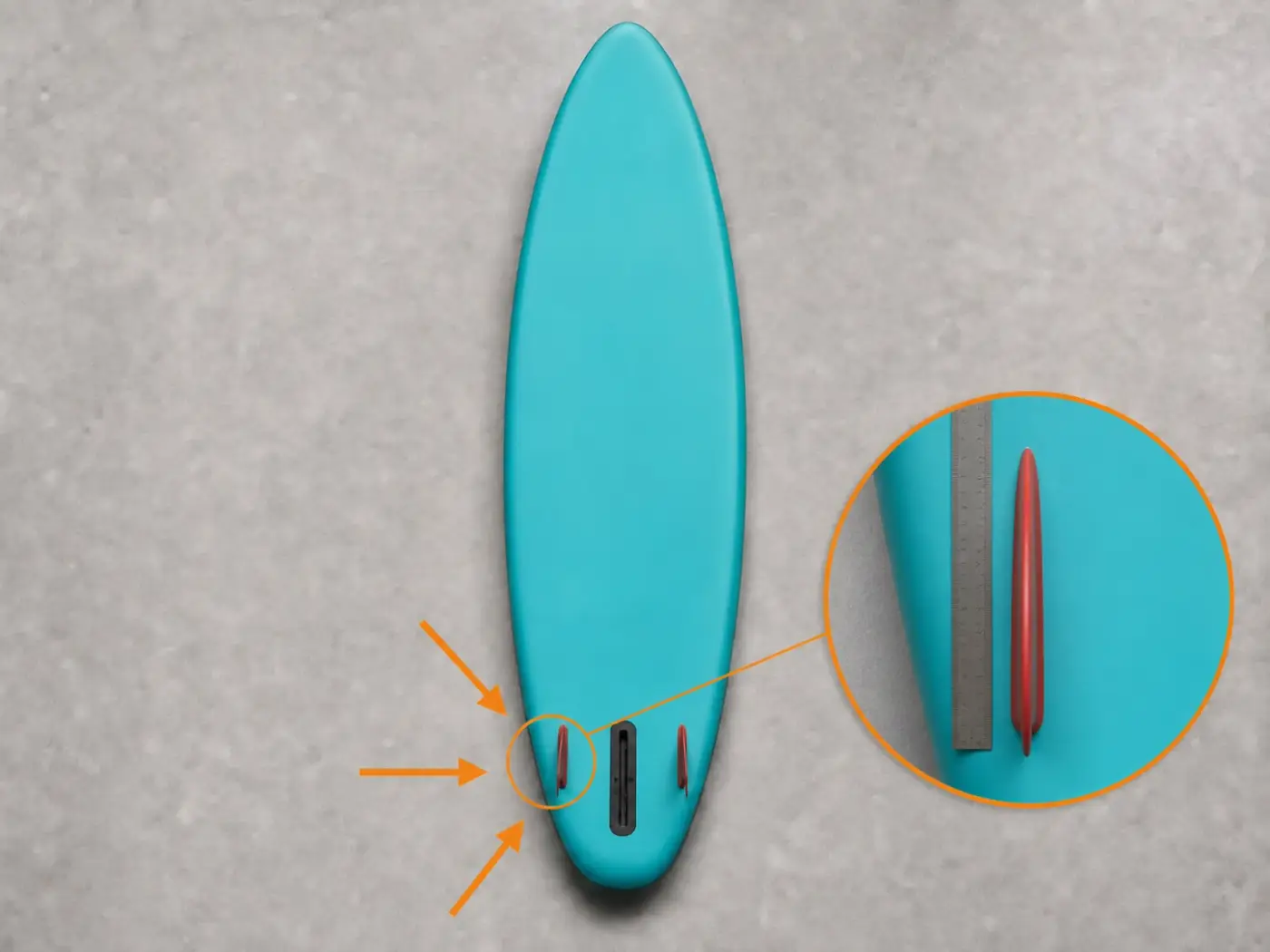
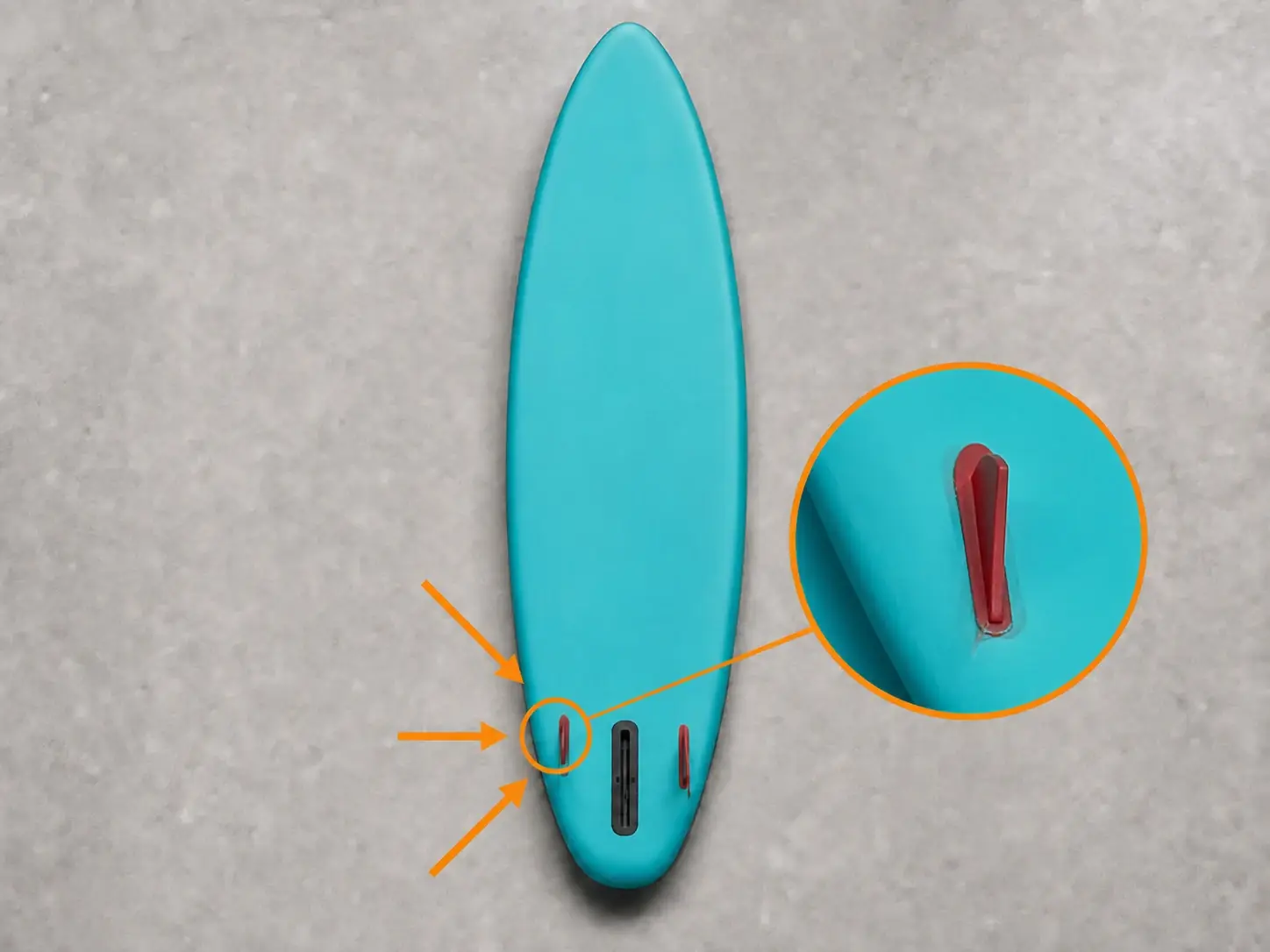
Bent red fixed fin under a pale-aqua SUP on a light bench

Water, support and checking are enough

No adhesive is required. Prepare everything before warming and keep water away from electrical equipment.

  • Hot water, never boiling
  • Stable container or cloths for applying heat evenly
  • Thick towel for protection and drying
  • Removable tape for holding alignment without marking
  • Ruler or square for checking the fin axis
  • Soft supports that leave the fin clear
  • Heat-resistant gloves and splash protection

The steps, one by one

  1. Look for cracks and separation

    Deflate the SUP and view the fin from both sides. Flex its tip only slightly while looking for a crack, a white stress line, a cut or movement between the base and board.

    A fin that is merely bent may recover its shape; a cracked, cut or detached fin requires replacement or professional repair.
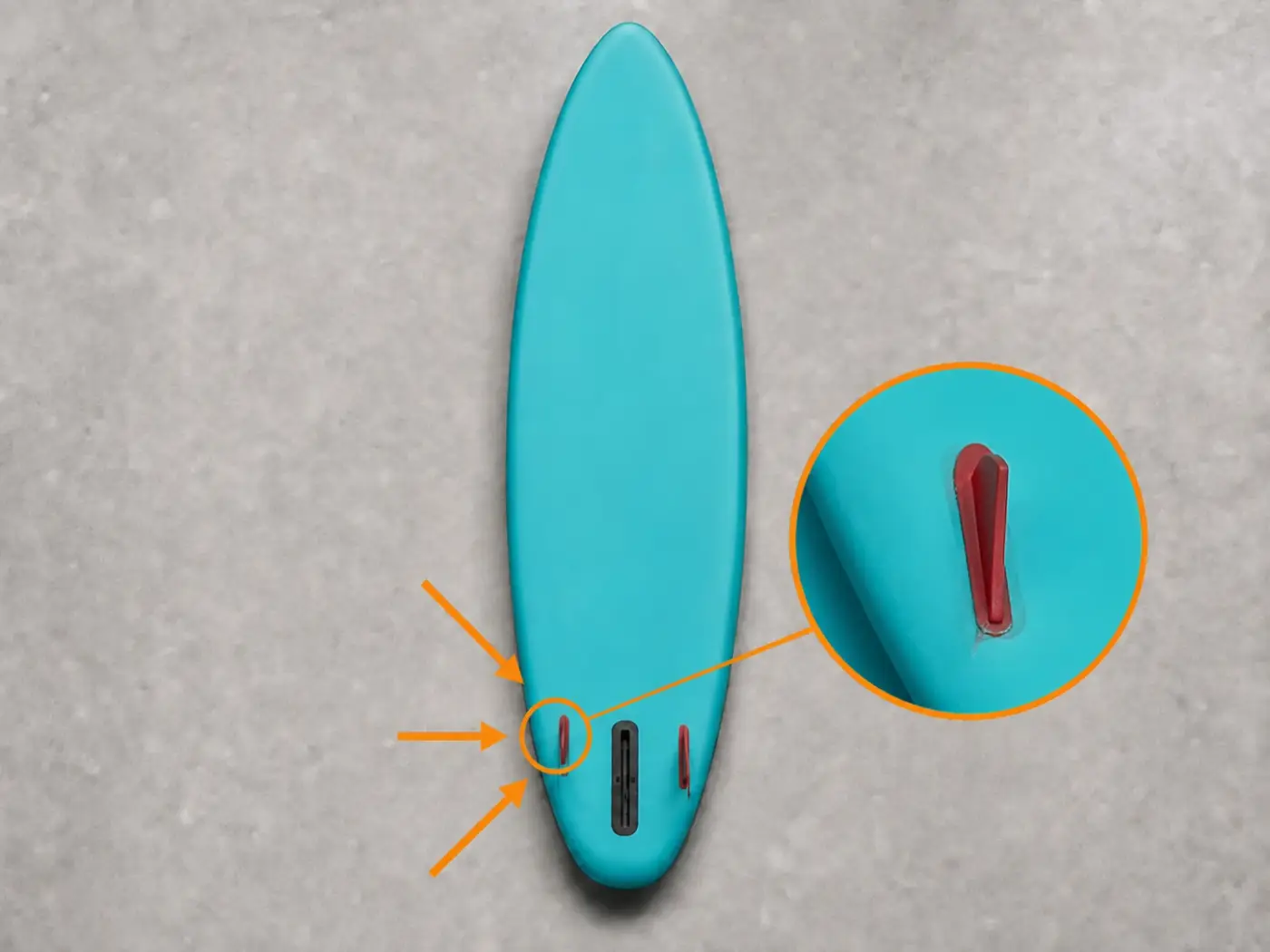
    Bent red fin inspected beside a magnifier and ruler with its intact base fully visible
  2. Support the board without loading the fin

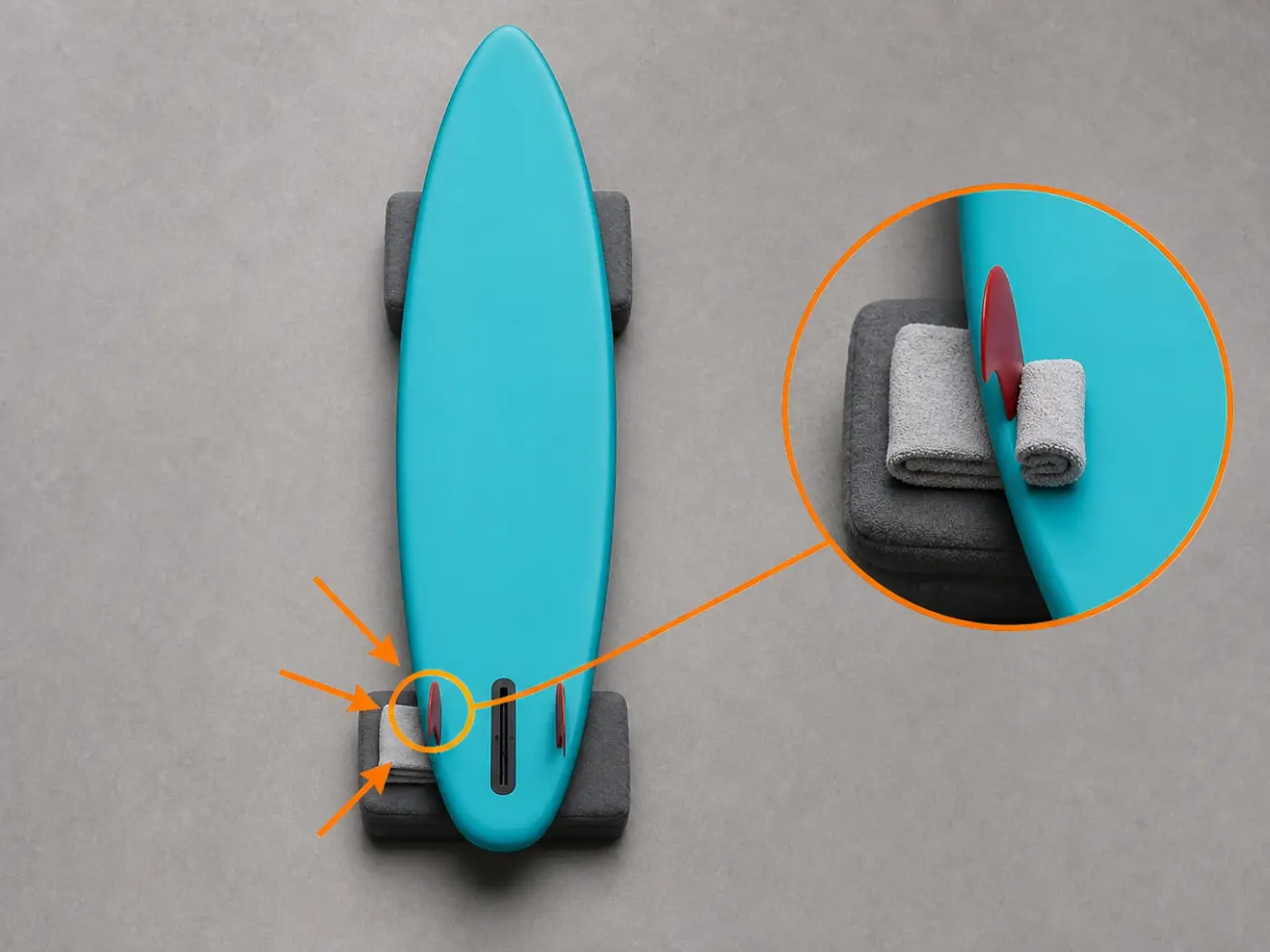
    Turn the SUP over onto soft, stable supports and leave the fin clear. Protect the work surface and prepare a safe path for the hot water.

    The board must remain deflated and still. Do not rest it on the fin or try to lever the fin straight while cold.

    Inverted SUP on soft supports with the bent fin clear above a towel
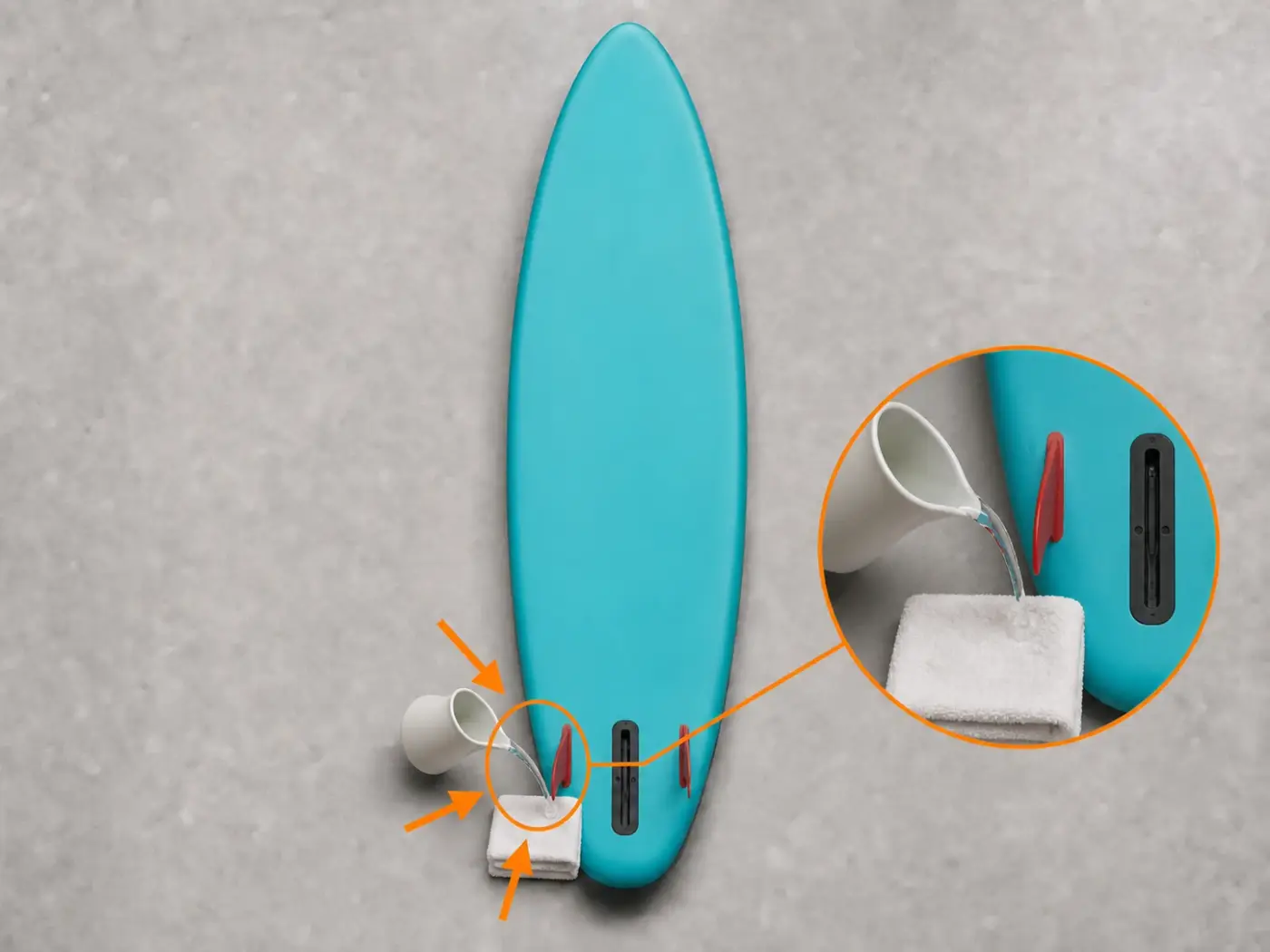
  3. Warm the fin evenly

    Wet or wrap only the fin gradually with hot water that is not boiling until the material becomes more flexible. Distribute heat from base to tip without concentrating it on the PVC.

    There is no universal temperature: stop if the material changes colour, becomes excessively soft or gives off an odour.

    Hot water applied in a controlled stream to the red fin above a towel and away from the rest of the SUP
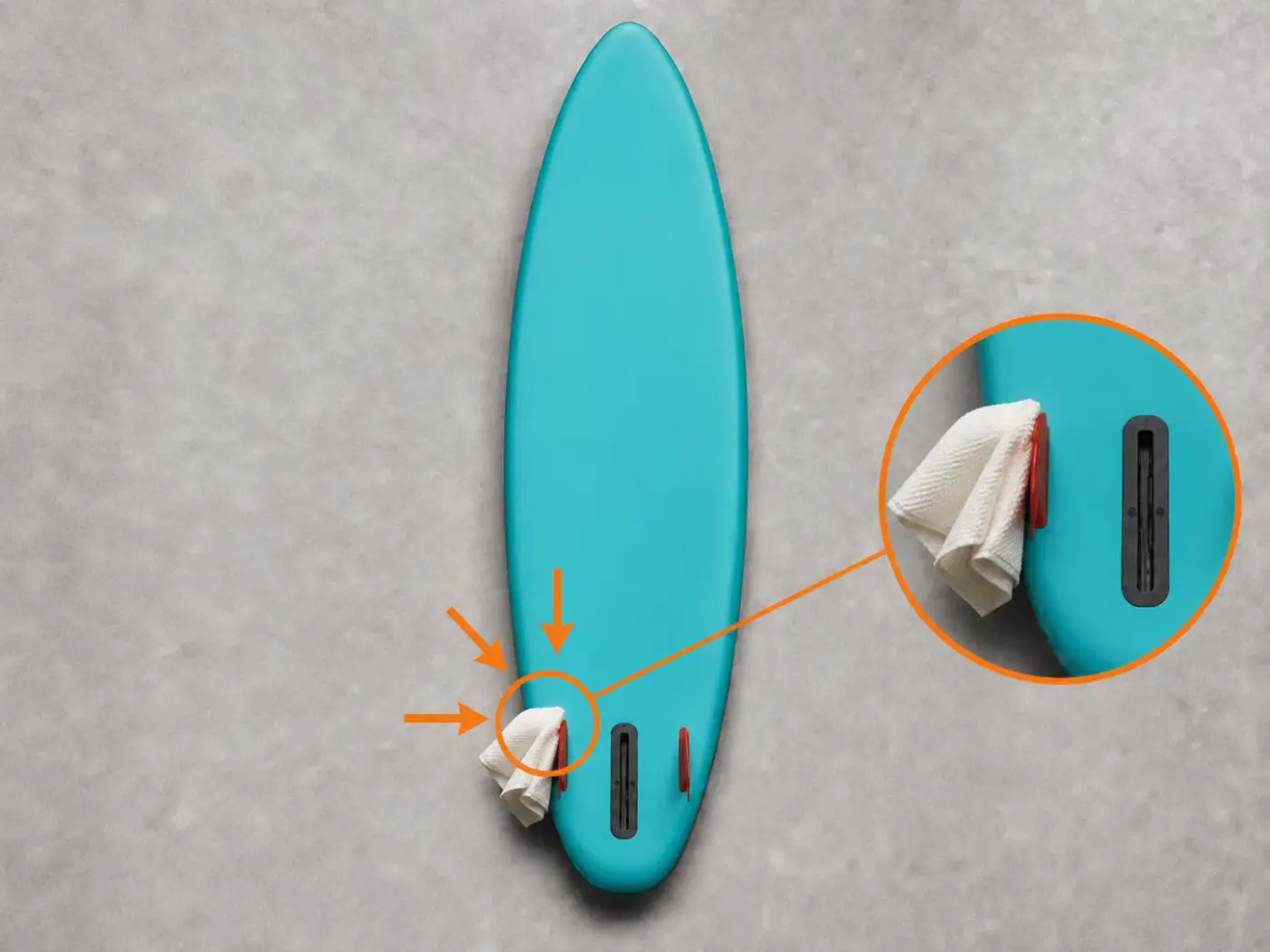
  4. Dry and inspect the material again

    Blot the fin and board without rubbing. While the material is still flexible, check again that no cracks or separations have appeared at its base.

    If damage appears during warming, do not continue with more force or heat.

    Warm fin blotted with a towel with its base and the SUP surface completely visible
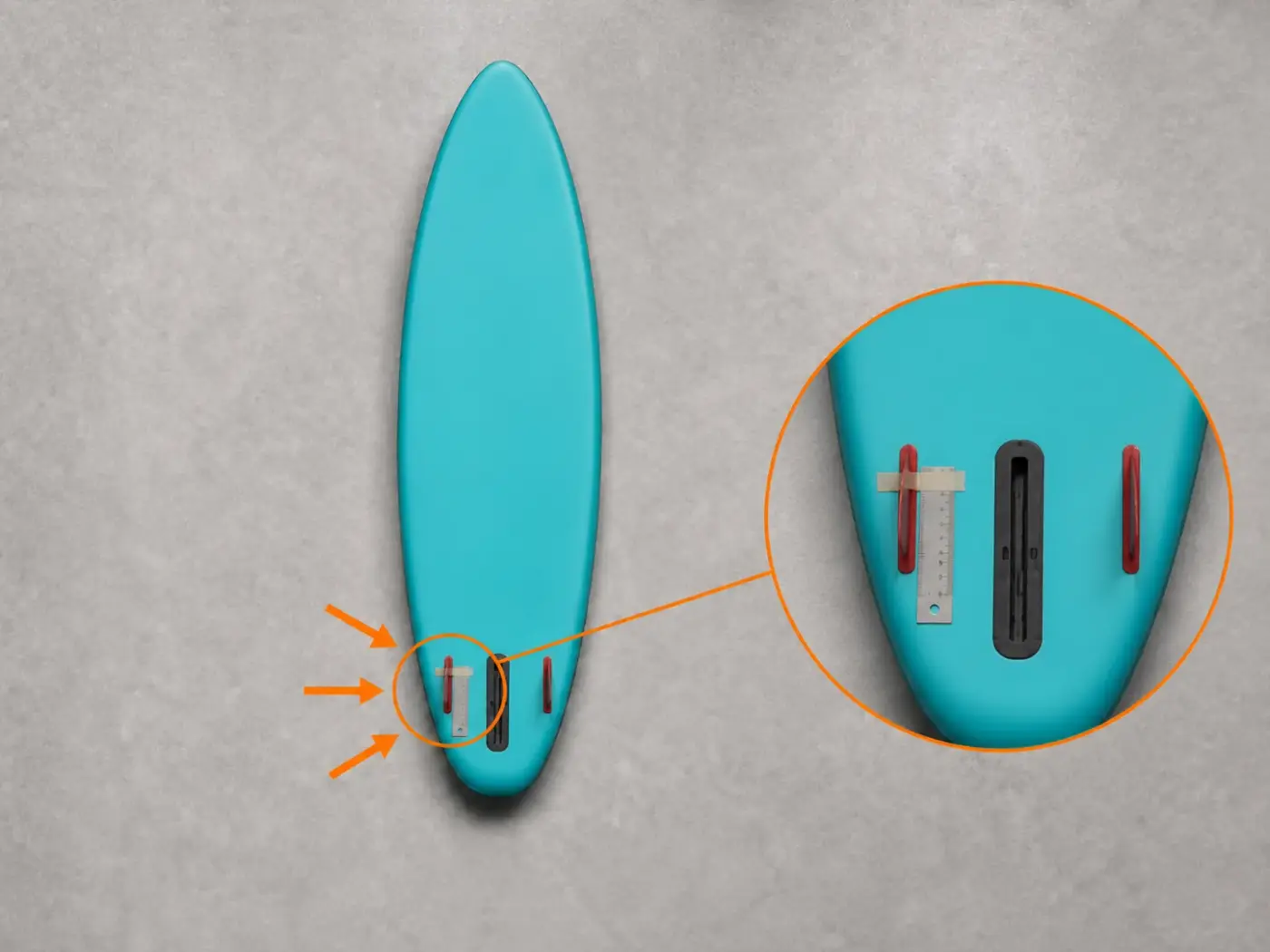
  5. Bring the fin slowly back into line

    Guide the fin towards the centreline with broad, progressive pressure. Compare its profile with a square and, if needed, use removable tape to hold it without crushing the base.

    Do not bend beyond the centreline to compensate for spring-back. If resistance becomes pronounced, stop without adding more heat or force.

    Red fin aligned against a square and held at its tip with removable tape
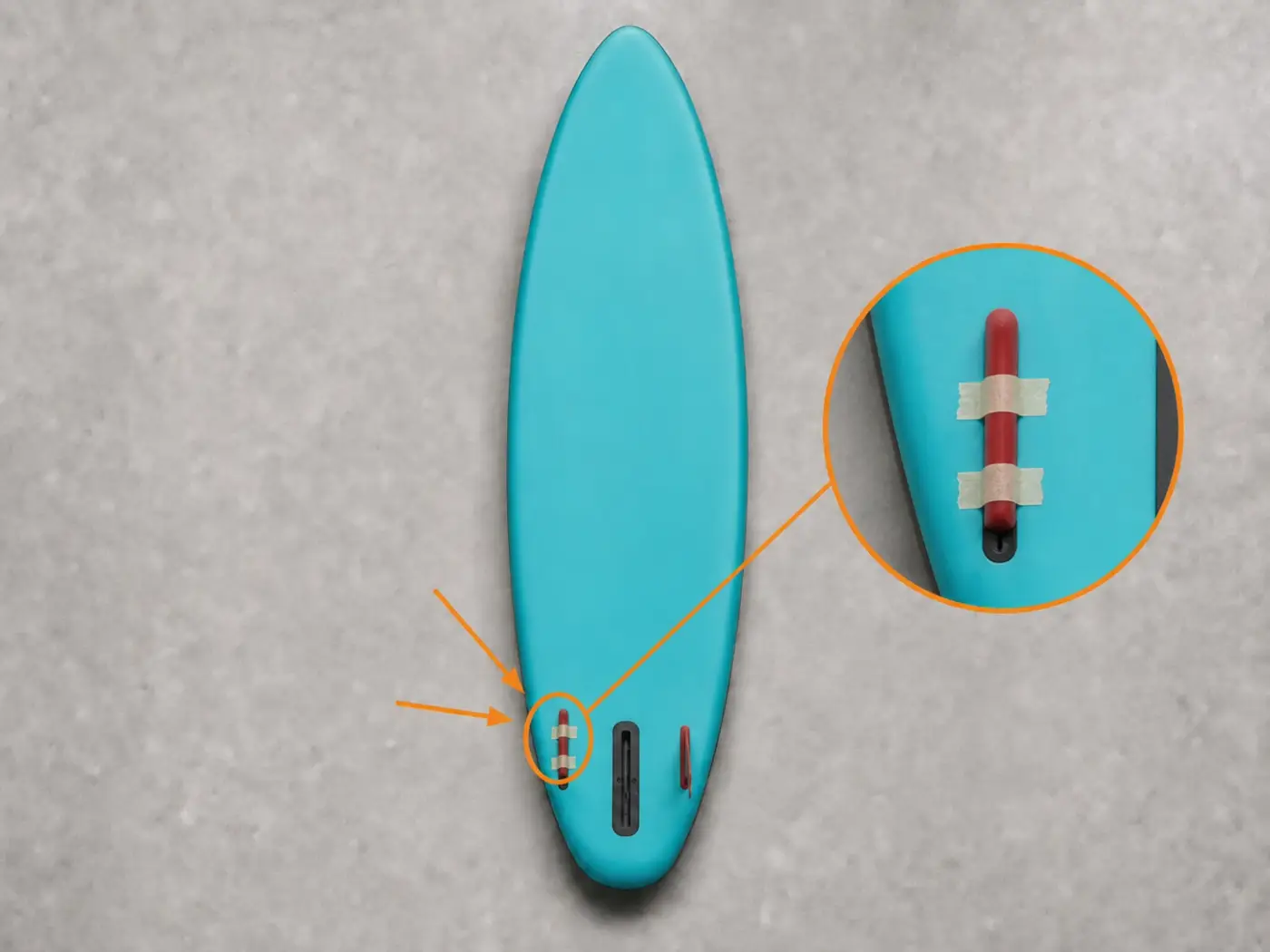
  6. Allow it to cool in the correct position

    Hold the fin in line until it has returned fully to room temperature. Do not move the tape or place loads on the board while it cools.

    A flexible fin designed to bend may continue recovering by itself. Do not stiffen it with improvised resin or reinforcement.

    Fixed fin held straight with light tape while cooling on stable supports
  7. Check alignment, base and spring-back

    Remove the tape and compare the fin from the front and back of the board. Confirm that its base remains firmly attached and that a small bend returns without noise or new lines. If those checks are normal, complete a slow water test close to shore.

    If it immediately bends far back, remains unstable, shows a crack or behaves abnormally during the test, return to shore and assess replacement.

    Straight fixed fin checked with a ruler along the SUP axis with no distortion at its base

When the fin should be replaced

Stop before adding more heat if any of these cases applies:

  • crack, cut, white stress mark or partly broken tip
  • lifted base, moving fin box or distorted SUP skin
  • rigid, composite or removable fin, or unidentified material
  • need for a flame, heat gun or uncontrollable temperature

Is the fin cracked or moving at its base?

Send RiparoSUP side, front and base photographs. We will assess whether straightening, replacement or support repair is appropriate.