How to repair a detached SUP D-ring

A cautious procedure for reattaching the PVC base of a D-ring, the D-shaped anchor. Continue only when the skin is intact and the ring has no safety role.

  • 7 steps
  • Identified PVC only
  • Drying time follows the product
Start with the diagnosis
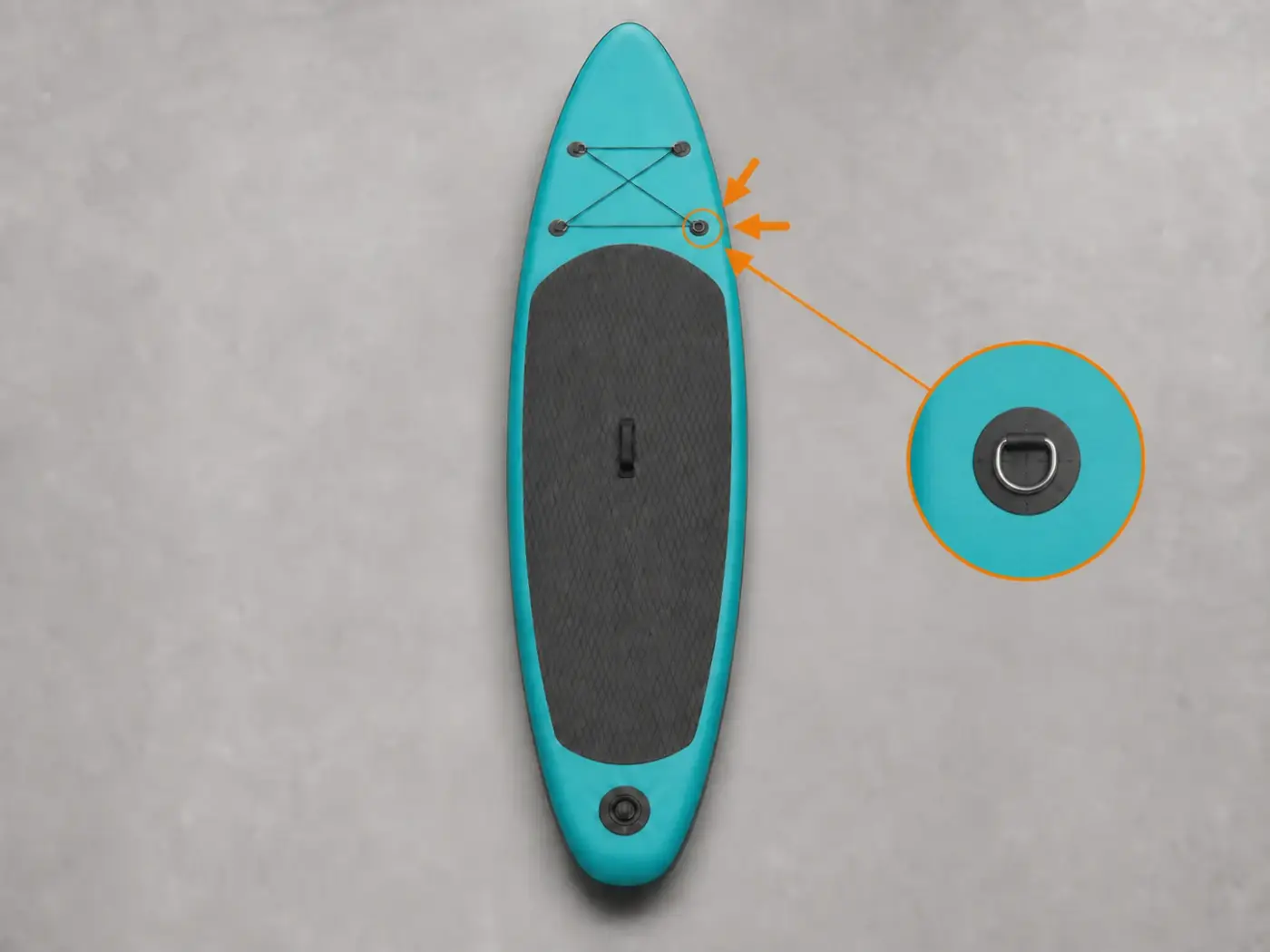
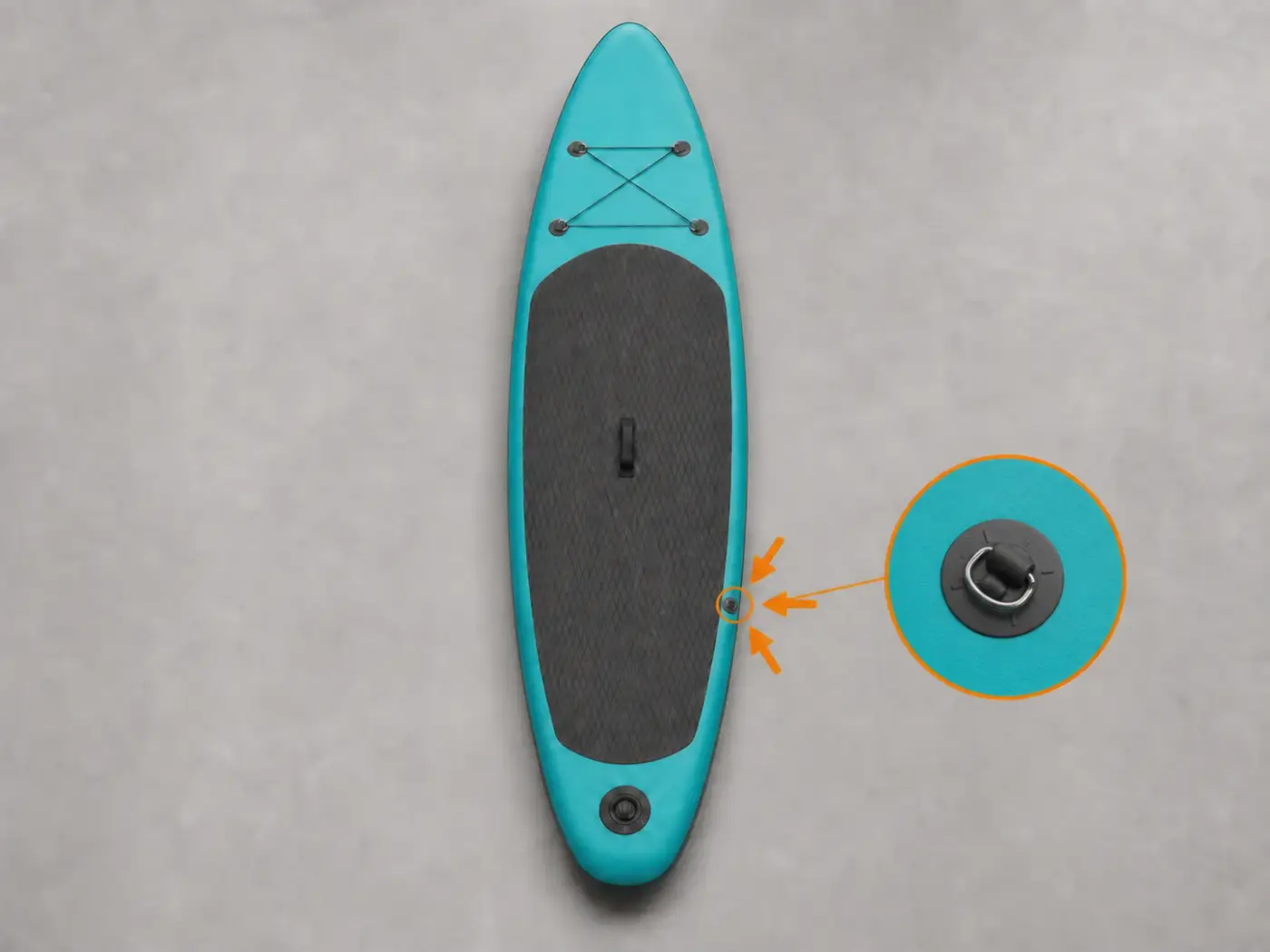
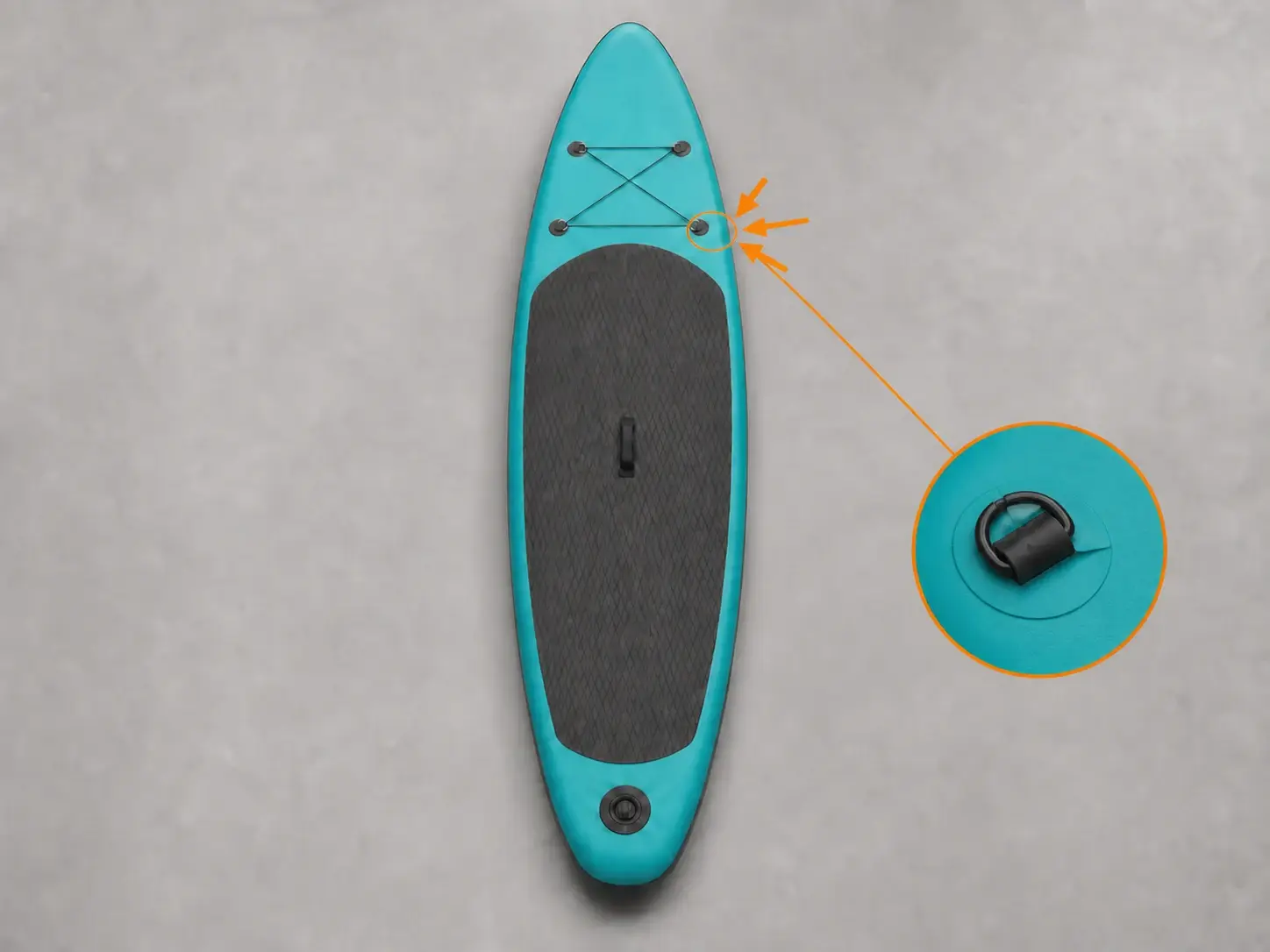
Black D-ring with its round base partly detached from a turquoise SUP on a light bench

Prepare a system compatible with both surfaces

Check that the PVC, D-ring base and adhesive are compatible. Follow the adhesive label for amounts, waiting times and preparation.

  • Adhesive stated to be compatible with the PVC and D-ring base
  • Cleaner specified by the adhesive manufacturer and lint-free cloths
  • Fine abrasive paper, only when required by the adhesive instructions
  • Compatible marker or tape for recording the position
  • Small brush or applicator specified by the system
  • Hand roller for applying even pressure
  • Gloves suitable for the product and eye protection

The steps, one by one

  1. Check the base, skin and purpose of the ring

    Prepare the SUP as stated by the board maker and adhesive instructions. Check that the base and PVC are intact. The ring must not be used to support a person, tow or carry another important load.

    Continue only when the ring does not support people or important loads and the PVC is sound. If the pressure or purpose of the ring is uncertain, stop and request professional assessment.
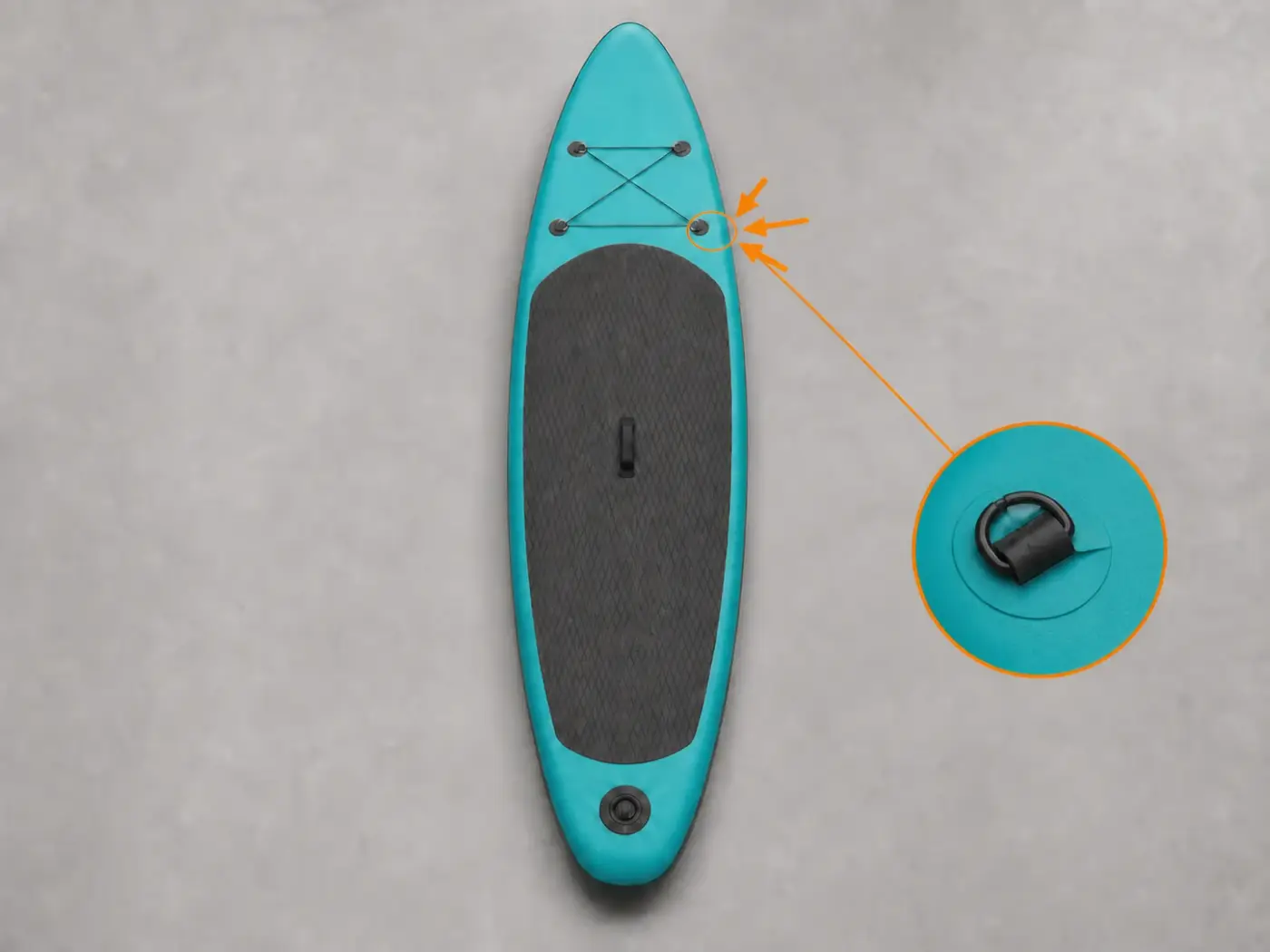
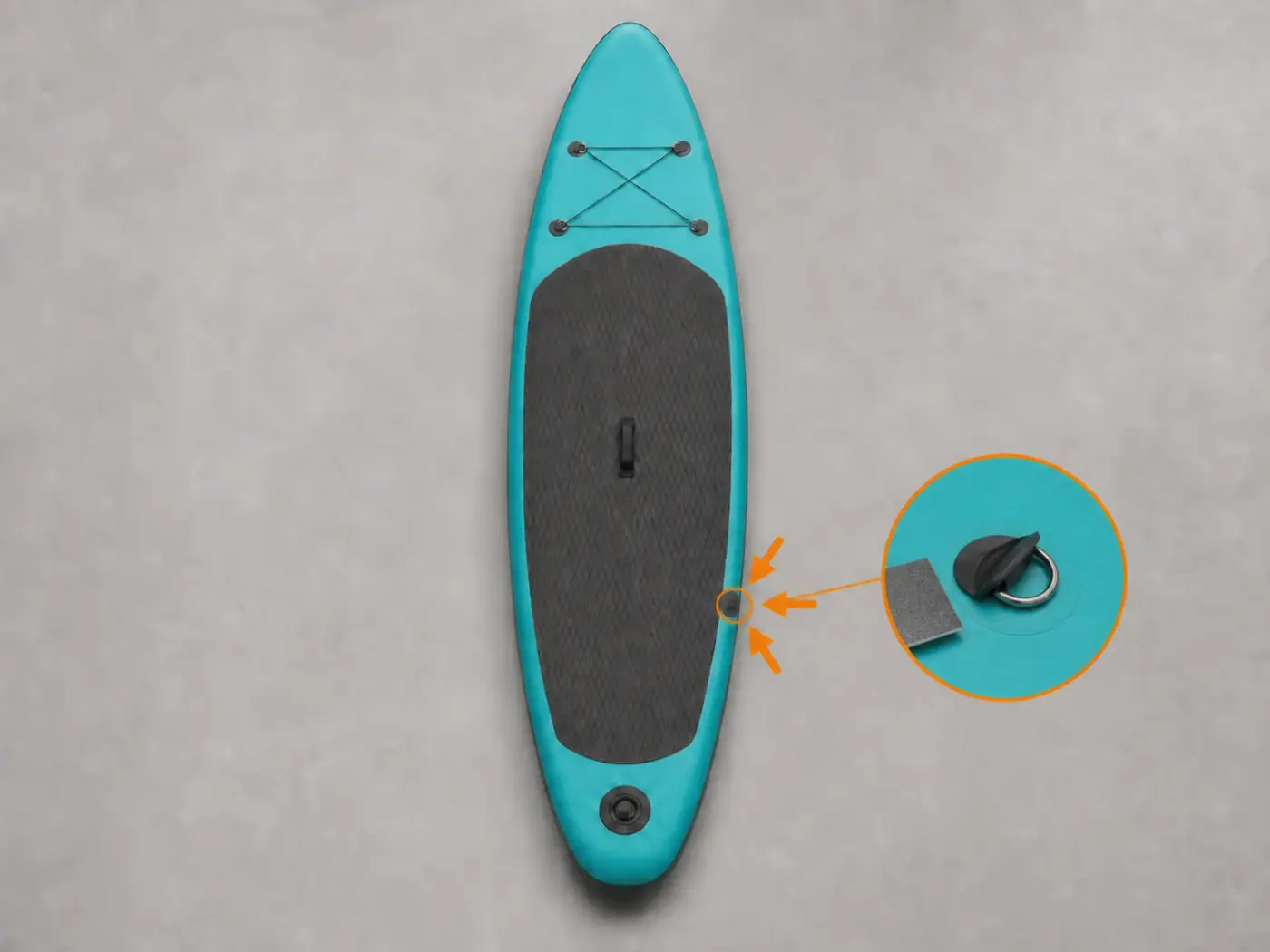
    D-ring with a lifted base checked beside a magnifier on a stable turquoise SUP
  2. Place it without adhesive and mark the position

    Return the base to its original position without stretching it. Check the ring direction and add small marks to recover the position at first contact.

    Follow the condition stated by the board maker. Do not copy the pressure used on another inflatable.

    Round D-ring base placed dry inside small marks on turquoise PVC
  3. Sand lightly only when required

    Only when the adhesive instructions require it, gently rub both surfaces with fine abrasive paper. Stay inside the outline and remove only the shine.

    Do not thin the fabric or expose its weave. If you cannot identify the board or base material, do not sand it.

    Base and round SUP area made slightly dull with fine abrasive paper
  4. Clean and allow to evaporate

    Remove all dust. Clean the PVC and base separately with the stated product. Test it in a hidden place first and do not touch the clean surfaces again.

    Open the cleaner only with suitable ventilation and wait for complete evaporation before applying adhesive.

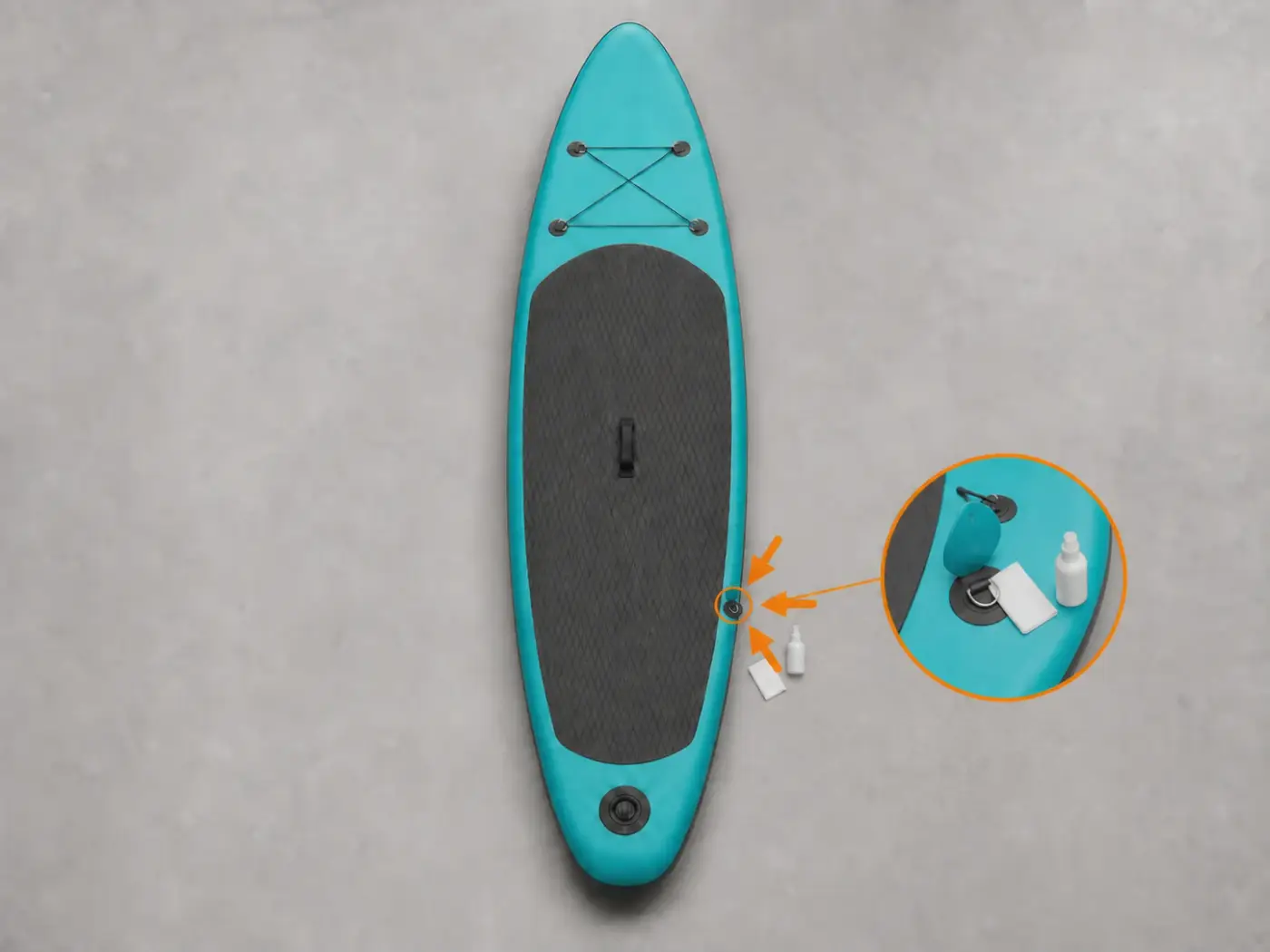
    Base and round area cleaned with lint-free cloths and closed bottle away from the SUP
  5. Apply the coats specified for the product

    Spread the number of coats stated on the label over both surfaces. Each layer must be thin and even.

    Join only when the adhesive is ready as described on the package. It should not be wet or leave a mark. Avoid thick deposits outside the outline.

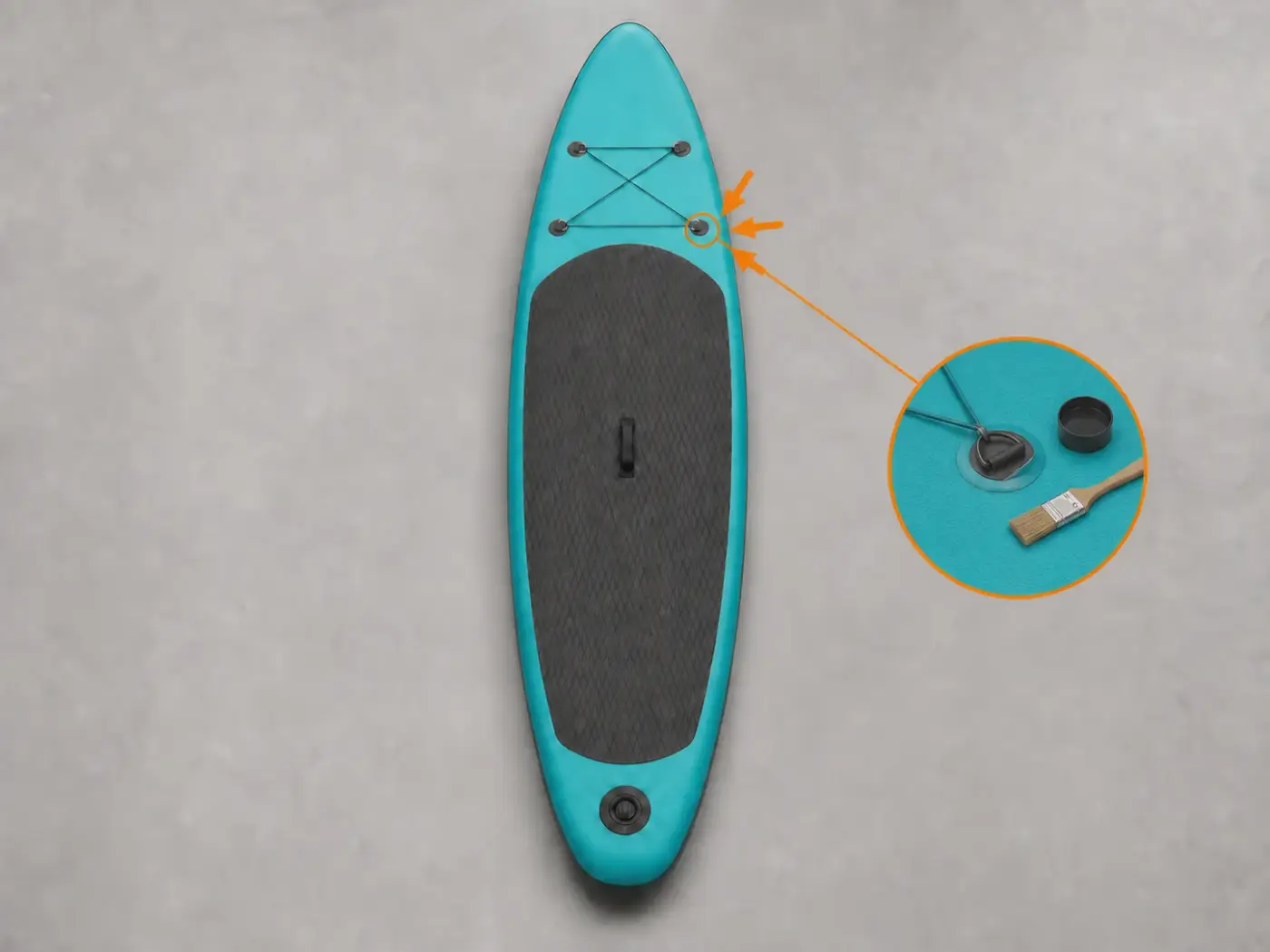
    Both round surfaces covered by a thin even adhesive layer with the brush still and container closed
  6. Align, join and roll

    When the adhesive is ready, align the marks and lower the base a little at a time without bending the board. Roll from the centre to the edge in several directions.

    Expel air and excess adhesive without dragging the part. Do not hide a lifted edge or bubble under another layer of adhesive.

    D-ring base centred and pressed with a small roller from the centre towards the edge
  7. Let it dry and test gradually

    Protect the point from movement, water, sunlight and load for the full time stated on the package. Then inspect the edge and pull the ring only lightly and gradually.

    When the adhesive is fully dry, inspect the whole edge and pull the ring only lightly and gradually. Never test it with a person or an important load.

    Repaired D-ring held still with its base glued around the entire edge

When the D-ring requires assistance

Stop before sanding or gluing if any of these cases applies:

  • anchor intended for a safety cord, towing, lifting or another important load
  • uncertain, damaged or incompatible board or base material
  • torn or distorted PVC, separated layers or an earlier repair that already failed
  • not enough fresh air, gloves, eye protection or a readable product label

Does the anchor carry load or is the support weakened?

Send RiparoSUP photographs of the D-ring, its base and the nearby area. We will assess the case before you remove material or apply adhesive.